

An emergency fund is widely discussed as a must have for your financial plan. Yet, I find that clients often come to me unclear about its true purpose and the right amount to save. The challenge often lies in the abundance of “one-size-fits-all” advice out there that doesn’t account for individual circumstances. Personal finance, after all, is well “personal” at the end of the day. While general guidelines are helpful, taking a more nuanced approach ensures your emergency fund is truly effective.
Why You Need an Emergency Fund
Life is unpredictable. Job loss, health issues, or unexpected expenses can happen to anyone, and without a financial cushion, these events can quickly derail your stability. An emergency fund allows you to navigate these challenges without the added stress of financial strain. Imagine losing a job and having to settle for the first opportunity that comes along just to make ends meet—an emergency fund gives you the freedom to make decisions that align with your long-term goals, rather than being driven by immediate financial pressures.
Factors to Consider
While the standard advice is to save 3 to 6 months’ worth of basic living expenses, your unique situation may require more. Here are four factors to consider for dialing up your emergency fund:
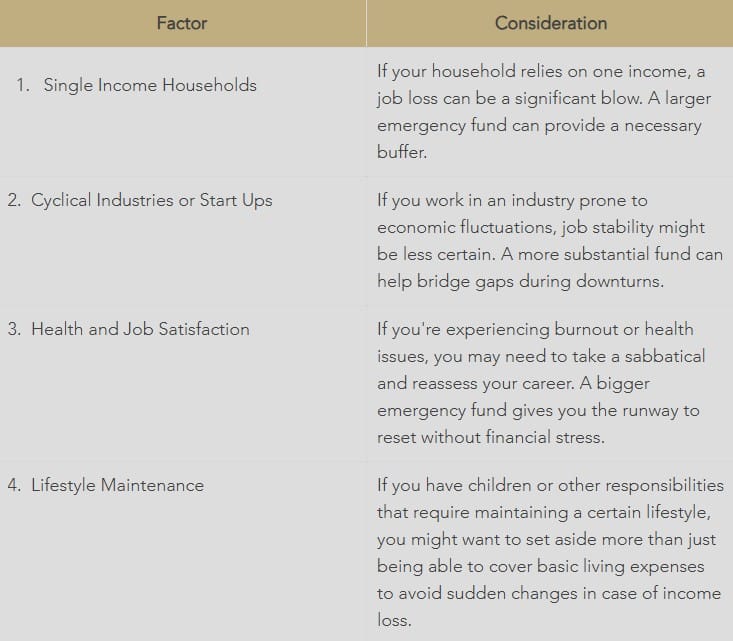
Finding the Right Balance
If you haven’t yet built an emergency fund or it’s not where you’d like it to be, then no judgement or cause for shame. Progress is progress, no matter how small. Start by setting aside a little each month or allocating a portion of any windfall, like a bonus or tax refund. On the flip side, it may be hard to believe, but there is actually such a thing as over-funding for emergencies. If none of the above factors apply to you and you have access to other financial resources, like a low-interest Home Equity Line of Credit (HELOC), you might be better off investing some of that money instead.
The Bottom Line
A well-funded emergency fund is your financial peace of mind, enabling you to weather life’s storms without derailing your financial goals. Start with the 3-6 month rule, but don’t stop there—carefully consider your personal circumstances to find your optimal balance.
Disclaimer: All written content is for informational purposes only. None of the information provided is intended as investment, tax, accounting, or legal advice, as an offer or solicitation of an offer to buy or sell, or as an endorsement of any company, security, fund, or other securities or non-securities offering. All information provided should be discussed with a registered advisor, accountant, or legal counsel prior to implementation. Opinions expressed herein are solely those of Sheer Empowerment Financial LLC (“SEF”), unless otherwise specifically cited. Presented material is believed to be from reliable sources and no representations are made by our firm as to another parties’ information accuracy or completeness.