

Feeling the pull to change career paths? You’re not alone. Many 30 and 40 year old professionals hit a point where they crave more meaning, flexibility, or even a complete change of scenery. But making a career pivot can feel daunting, especially when you have financial responsibilities like a mortgage, kids, or savings goals. The good news? With preparation and the right financial strategy, you can make your bold career pivot without derailing your long-term financial security.
Let me share a bit about my own career pivot. In 2018, after working for 12 years at a top-tier wealth management firm in Boston, I felt a pull to make a bold change. My wife and I decided to embrace a new chapter, moving with our two young children to the beautiful White Mountains in New Hampshire and focusing on starting our own businesses. This shift wasn’t just about leaving the hustle of Boston behind—it was about designing a life that prioritized our health, family, and personal values.
I realized that I wanted more than just professional success; I wanted meaningful work that truly aligned with my passion for helping others. Instead of supporting the ultra-wealthy, I felt called to help my peers—those working hard to build wealth for a secure future. Looking back, this was one of the best decisions of my life. Not only has it transformed our work-life balance and well-being, but it has also enhanced our family’s day-to-day life in ways we couldn’t have imagined.
We made some smart financial moves that paved the way for this transition, and, of course, there are things I’d do differently if I could go back. I’m excited to share both the wins and the lessons learned to empower you on your own career pivot journey.
How to make a smooth and financially sound career transition?
1. Assess Your Current Financial Situation
Before you make any big moves, get crystal clear on your financial health. This means:
- Reviewing your budget: Know exactly where your money is going each month.
- Building a large emergency fund: If you don’t already have 6-12 months of living expenses saved, prioritize building that cushion now. Career transitions can come with unpredictable income changes.
- Checking your debt: High-interest debt can become a burden if your income fluctuates during a career change. Consider tackling credit card debt or personal loans first.
2. Upskill Without Breaking the Bank
A pivot often can require new skills. If possible instead of going for expensive degrees or certifications right away, explore cost-effective alternatives:
- Online courses (like Coursera or Udemy): Affordable and often flexible, these courses can give you the knowledge you need without a hefty price tag.
- Networking & Mentorship: Sometimes, the best insights and opportunities come from people in your desired field. Join industry groups, attend webinars, or reach out to potential mentors.
3. Test the Waters with a Side Hustle
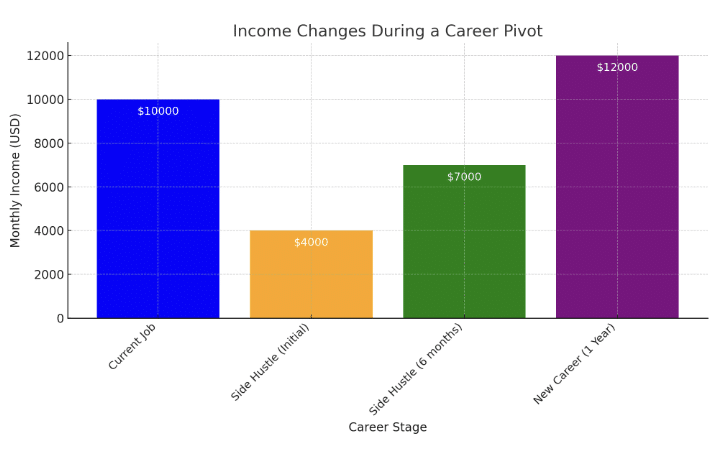
Before diving into a new career full-time, consider starting with a side hustle. This lets you build experience, a portfolio, and some income without fully giving up your current job. If you’re moving into freelance, consulting, or any gig-based work, this step can be invaluable. Here’s an example of what the income progression could look like if you start with a side hustle:
4. Save Aggressively Before the Transition Comes
If you plan to step back from a full-time role or take a temporary pay cut, increase your savings rate now. Use the time before the transition to bolster your savings—cutting back on non-essentials and focusing on building a buffer for those leaner months. The more you save, the less financial stress you’ll face during the transition.
5. Negotiate Your Value
Whether it’s a new role in a different field or a freelance gig, don’t undervalue yourself. Research what others in your target field earn and be prepared to negotiate. It’s easy to feel uncertain when you’re making a switch, but your experience from previous roles brings value. Emphasize how your unique perspective and skills can make an impact in the new field.
6. Don’t Forget About Your Other Savings Goals
It’s tempting to put things like retirement contributions or college savings on hold during a career shift, but try not to stop altogether. Even if you’re cutting back, keep contributing something to these accounts. Time and compound interest are powerful forces in investing, and staying on track, even with small contributions, will add up in the long run.
Bottomline
Pivoting careers takes courage and can feel risky, but it’s also an opportunity to align your work with your passions and values. Maintaining the status quo and staying in a work situation you are dissatisfied with can also be risky for your health if it leads to burnout. With a solid financial plan in place, you can make this transition without sacrificing your long-term security. Take it from me, your career doesn’t have to follow a straight line—and neither does your financial journey. Flexibility, foresight, and strategic planning are your best allies in this next chapter.
Ready for a career pivot? Start by taking small, strategic steps today. Your future self will thank you!
Disclaimer: All written content is for informational purposes only. None of the information provided is intended as investment, tax, accounting, or legal advice, as an offer or solicitation of an offer to buy or sell, or as an endorsement of any company, security, fund, or other securities or non-securities offering. All information provided should be discussed with a registered advisor, accountant, or legal counsel prior to implementation. Opinions expressed herein are solely those of Sheer Empowerment Financial LLC (“SEF”), unless otherwise specifically cited. Presented material is believed to be from reliable sources and no representations are made by our firm as to another parties’ information accuracy or completeness.